How to Take Over a ChatSan Conversation and Close the Sale
Published April 15, 2026
Most OFM chatters open a scored lead and start from scratch. The lead feels the shift and ghosts. Here's the one step that determines whether a warmed handoff actually closes.
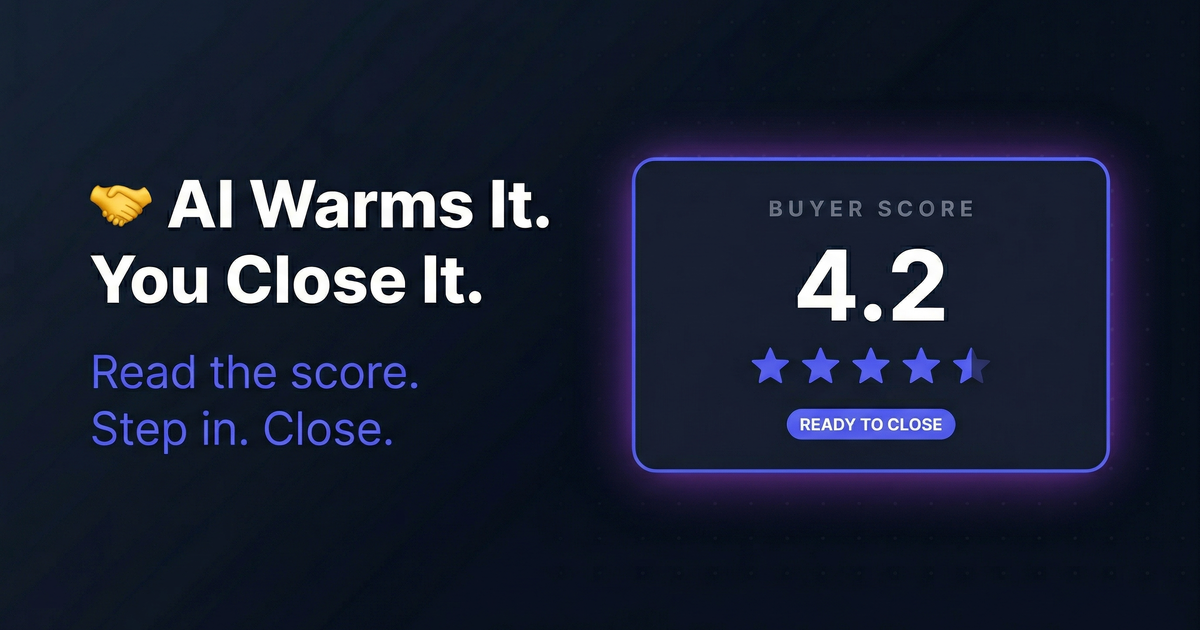
A lead just cleared ChatSan's 7-phase warmup. The buyer score reads 4.2. Your chatter opens the chat, sends a generic opener, and the lead ghosts.
That's not a traffic problem. That's a handoff problem.
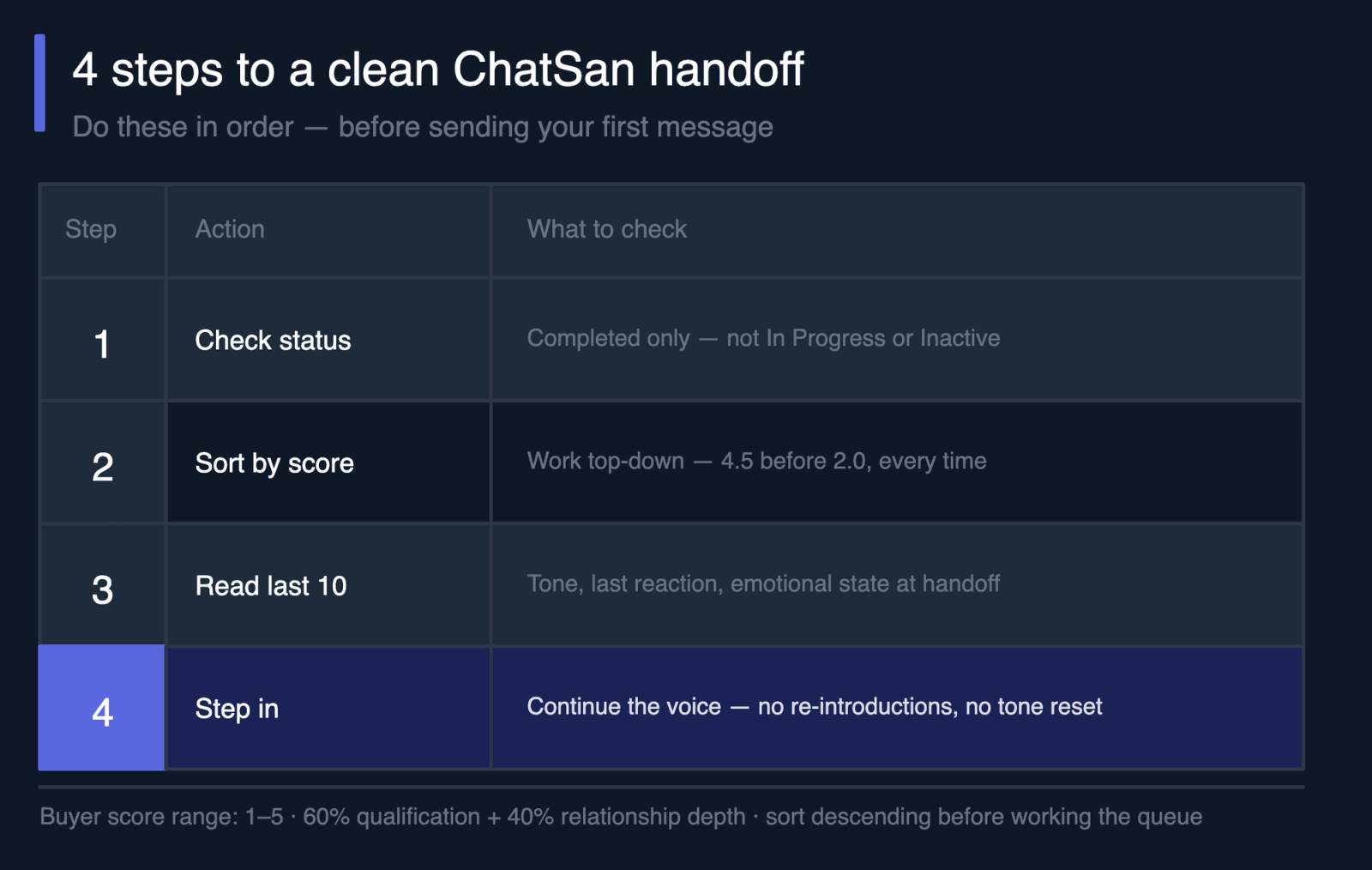
When a chatter takes over a ChatSan conversation, there's one rule that determines whether they close or lose the lead. Read the last 10 messages before sending anything. That's it. Everything else builds from there.
Most OFM agencies lose revenue right there: between a scored lead and a chatter who knows what to do with it.
When the Bot Steps Back
ChatSan runs the full pre-sale funnel and steps back at Phase 6, the Last Action. Depending on how it's configured, that final message lands with a payment link for a Telegram PPV sale, a redirect to OnlyFans or Fansly, or nothing at all for a soft close where the human chatter takes over before any offer is made. The moment a lead reacts to that final message, the conversation belongs to your team.
Two Situations, Same Move
Some leads come in after the AI chatter already sent a PPV link and they reacted. From there, the chatter runs the escalation loop, raising price and content intensity until the lead objects or the script ends. For the redirect lead, it's a negotiation. The objection is about the platform, not the creator. Both situations follow the same takeover steps, and what changes is the first move after reading the conversation.
Status First
The status field in the Conversations table determines whether a conversation is ready to touch. Completed means the Last Action has gone out and the AI chatter has stepped back. In Progress means the warmup is still running, and chatters who take over at this stage consistently break the lead's emotional engagement. Inactive is a different situation. The buyer score and conversation history only mean something once the full funnel has run.
Who to Work First
Every completed conversation comes out of ChatSan with a score from 1 to 5. Sixty percent of that number comes from how the lead qualified on age, location, and purchasing signals. Forty percent comes from how engaged they stayed across the warmup phases. A 4.5 passed qualification and stayed emotionally present the whole way. A 1.5 gave minimal responses and dropped off early. Chatters sort the Conversations table by score, descending, and work from the top.
The Conversation You're Walking Into
Most chatters skip reading the conversation before sending the first message. ChatSan passes the full history to your team. Every message, every reaction. Most salespeople would spend a full call cycle collecting that much context on a lead. The chatters who use it open with something that continues the conversation. The ones who skip it open with something generic, and the lead can feel the reset even if they can't name it.
The last 10 messages are enough. That's where the lead's emotional state at handoff lives, whether they were warm, engaged, or already pulling back before the Last Action landed. What the first message says should come from there, not from a script.
The sharpness of that handoff data depends on how well the creator profile was configured. A sparse or loosely-configured profile produces less precise signals from the AI chatter.
The Takeover
By the time a chatter opens the conversation, the lead has spent dozens of messages building a relationship with the creator. They shared real personal information. They stayed engaged through the whole warmup arc.
The chatters who close consistently treat that history as live context. They don't introduce themselves. They don't reset the emotional register. They pick up where the AI left off, voicing the same creator character in the same tone. If the AI chatter left the conversation warm and intimate, the human chatter starts from that same register.
Most chatters reset. The lead feels it immediately, even if they can't name it. The offer doesn't land because the connection already broke.
How to Run the PPV Escalation Sale
Once you've re-engaged the lead and re-established conversational warmth, the PPV selling phase follows an escalation loop.
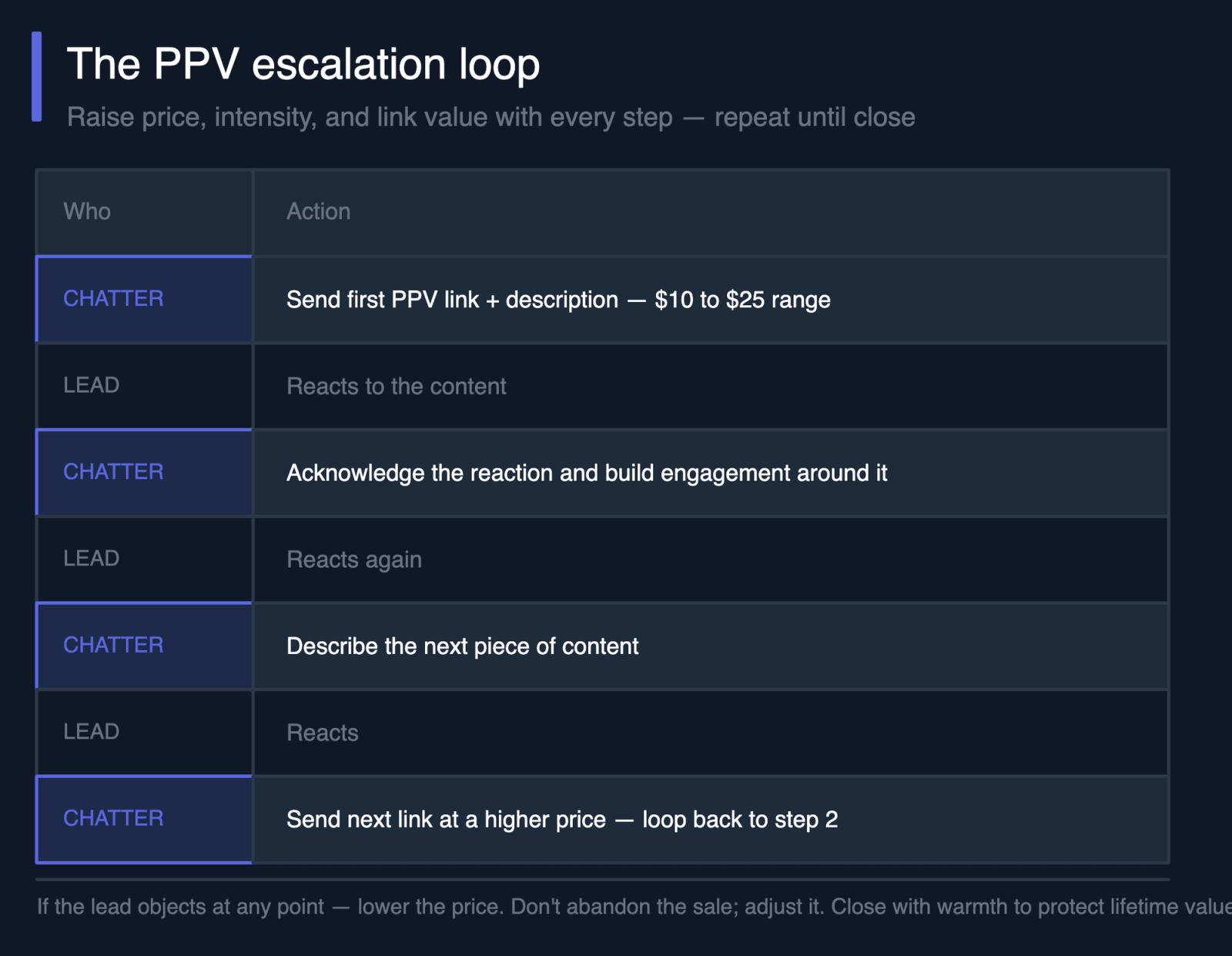
The principle: progressively raise price and content intensity until the lead objects or the script ends.
Starting point. If the AI chatter's Last Action included a payment link and the lead purchased it, start the escalation from that position. If the Last Action sent a soft ask, your first move is a clear yes or no on the first content offer. Price range: $10 to $25 for the first link.
The escalation loop:
-
Send the first PPV link with an engaging description
-
Lead reacts to the content
-
Chatter acknowledges their reaction and builds engagement around it
-
Lead reacts again
-
Chatter describes the next piece of content
-
Lead reacts
-
Chatter sends the next link at a higher price
Repeat until the script ends or the lead objects. When they object, lower the price. Don't abandon the sale; adjust it.
The close. Once the sale is done, the goal shifts to retention. The lead should feel valued. Close in a way that makes them want to come back tomorrow.
Examples:
-
"I really loved spending this time with you"
-
"You were genuinely amazing, I don't say that to everyone"
-
"I'm exhausted in the best way. Talk tomorrow?"
A lead who feels good about the interaction is worth more in lifetime value than what they just paid. The close isn't an afterthought.
When the Lead Resists the Redirect
If the Last Action sent a redirect and the lead pushes back, they're not refusing the creator. They're hesitating on why another platform is even necessary. Most chatters read this as rejection and push harder.
The resistance sounds the same each time, and none of it's actually about her. "Why do I need to go there?" / "Is it paid?" / "I don't know about that." The step is what they're stuck on.
The platform is where the real relationship is. Not the subscription model. The fact that it's private. "There are too many people here, hard to give you real attention. On my platform it's just the two of us, way more relaxed. Things I can do there I can't do here."
If they're still hesitant, lower the entry. A trial link or a discounted first month removes the friction. Once they're through the door, the money follows.
When They Go Silent
Some leads clear the full ChatSan warmup and then go quiet before the Last Action lands. ChatSan fires an automatic follow-up when a lead goes silent, and if they don't respond, the conversation moves to Inactive in the dashboard.
An inactive conversation isn't a lost lead. Chatters who re-engage these with a personal message referencing something specific from the conversation recover leads the automation couldn't reach. Not a second automated message. Something the chatter noticed in the history.
Before You Open It
The chatters who close consistently do something before the first message. They check the conversation status reads Completed. They note the buyer score, read the last 10 messages, identify the Last Action type and how the lead responded, and decide whether they're running the PPV escalation or the redirect negotiation before writing anything. That call is made before the conversation opens, not during it.
The Division
The operation splits at the handoff. ChatSan handles qualification, warmup, and scoring across every conversation simultaneously. The same 7-phase methodology, any volume, no capacity ceilings. By the time a lead lands on your team, the heavy lifting is done.
What the human side brings is judgment. Reading this specific lead, in this specific conversation, and closing in a way that makes them want to come back. AI qualification paired with human closing consistently outperforms fully automated and fully manual approaches on deal size and repeat purchase rate. The reason is that they're solving different problems.
Connect your first creator, from $19/mo
Sources
-
"The Human Factor in AI-Assisted Sales," Harvard Business Review, March 2023, https://hbr.org/2023/03/the-human-factor-in-ai-assisted-sales
-
"Churn, Retention, and the Post-Sale Experience," Forrester Research, Q1 2024, https://www.forrester.com/report/churn-retention-post-sale-experience
-
"Subscription Commerce Benchmark Report," Recurly, 2024, https://recurly.com/research/subscription-benchmark-report/